


Wireless Fire Alarms & Wireless Fire Alarm Installation in the UK
Looking for reliable fire protection without extensive cabling? Wireless fire alarms provide a flexible solution for homes, offices, retail premises and commercial buildings.
At Home Security Systems UK, we design and install wireless fire alarm systems for residential and commercial properties across London and the UK. Our approach combines property assessment, suitable system design, professional installation, testing and ongoing maintenance to create dependable fire detection and warning systems.
Whether you are upgrading an existing fire alarm system, protecting a new property or looking for a lower-disruption alternative to conventional cabling, our team can help you choose a solution suited to your building, occupancy and fire safety requirements.
A wireless system can be particularly useful where extensive cabling would cause disruption or where the building fabric needs to be preserved. However, the right solution always depends on the property's layout, fire risk, system category and applicable UK requirements.
Need professional fire protection? Explore our fire alarm installation services for a tailored solution.
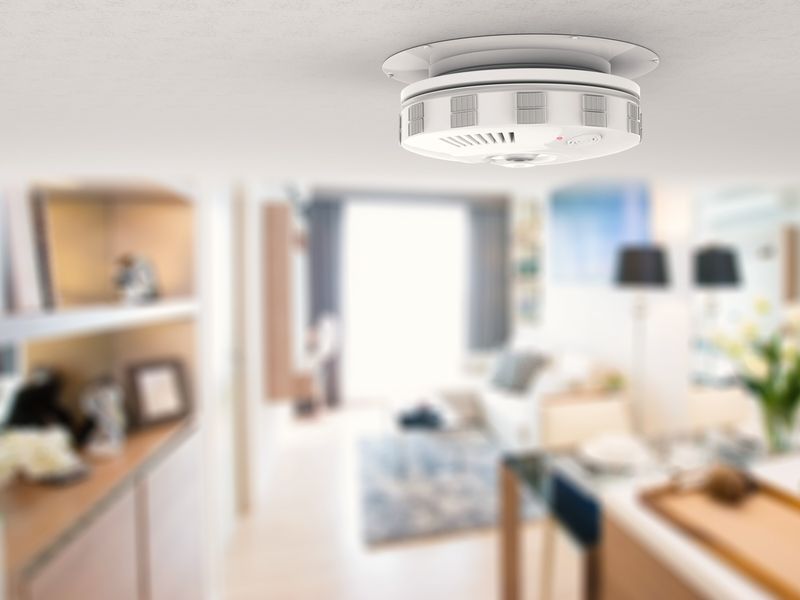
What Is a Wireless Fire Alarm System?
A wireless fire alarm system is a fire detection and warning system in which devices communicate with a control panel using wireless radio technology rather than relying entirely on physical cables.
A typical wireless fire alarm system can include:
● Smoke detectors
● Heat detectors
● Manual call points
● Sounders
● Visual alarm devices
● Wireless transceivers
● Fire alarm control panels
● Backup batteries
● Monitoring or communication interfaces where required
The system detects signs of fire, communicates the information to the control equipment, and activates the appropriate warning devices.
Unlike Wi-Fi-based smart-home devices, wireless fire alarm systems can use dedicated radio communication between system components. Internet connectivity may be used for additional features such as remote monitoring or notifications, depending on the system.
How Do Wireless Fire Alarm Systems Work?
Wireless fire alarms use radio communication to connect detection and warning devices with the fire alarm control panel, allowing the system to identify and respond to potential fire events.
1. Fire or Smoke Detection
Smoke detectors identify smoke particles, while heat detectors respond to temperature changes. The appropriate detector type depends on the room, environment, and fire risk.
2. Wireless Communication
When a detector identifies a potential fire condition, it communicates with the control panel using the system's wireless communication technology.
3. Alarm Activation
The control panel processes the signal and activates the appropriate sounders, visual indicators, or other connected devices.
4. Fault and System Monitoring
Depending on the system, the control panel can monitor devices and identify issues such as low battery levels, communication faults, or other system conditions.
5. Alerts and Integration
Some systems can integrate with other safety or security technologies, while selected solutions may support remote notifications or monitoring.
This makes wireless fire detection suitable for properties where flexibility, minimal disruption, and scalable protection are important considerations.
Why Choose Wireless Fire Alarms?
Wireless fire alarms can reduce installation disruption while providing a flexible way to protect buildings where extensive cabling may be difficult or undesirable.
Faster, Lower-Disruption Installation
Wireless systems can reduce the need for extensive cable runs, drilling, and structural alterations. This can make them particularly useful for occupied premises and buildings where access is difficult.
Flexible System Expansion
As a property changes, additional detection or warning devices may be required. A suitably designed wireless fire alarm system can provide greater flexibility for future expansion.
Suitable for Older and Listed Buildings
Wireless technology can be useful in older, listed or heritage properties where extensive cabling could affect walls, ceilings or architectural features. A professional survey is still required to determine whether wireless installation is appropriate.
Clean, Discreet Installation
With fewer visible cables, wireless fire alarms can provide a cleaner finish while maintaining effective fire detection.
Smart Monitoring Options
Depending on the system selected, wireless fire alarms can support remote notifications, monitoring, and integration with other building safety technologies.
Protection for Different Property Types
Wireless solutions can be considered for:
● Houses and flats
● Offices
● Retail units
● Warehouses
● Hotels
● Schools
● Industrial premises
● Heritage buildings
● Other commercial properties
Want to reduce installation disruption? Contact our team to discuss the right wireless fire alarm system for your property.
Wireless Fire Alarms vs Wired Fire Alarm Systems
Neither wireless nor wired fire alarms are automatically better. The right choice depends on the building, fire risk, layout, required system design and installation conditions.
| Feature | Wireless Fire Alarm Systems | Wired Fire Alarm Systems |
|---|---|---|
| Cabling | Requires significantly less physical cabling. | Requires dedicated cable infrastructure. |
| Installation disruption | Generally lower. | Can involve more drilling and cable routing. |
| Installation flexibility | High, subject to system design. | Dependent on cable routes. |
| Older buildings | Useful where alterations are undesirable. | May require more intrusive installation. |
| Expansion | Flexible when system capacity allows. | May require additional cabling. |
| Occupied premises | Can minimise disruption. | Installation can be more disruptive. |
| Maintenance | Includes battery and wireless device checks. | Includes cabling and system component checks. |
| Site assessment | Wireless signal assessment is important. | Cable routing and infrastructure assessment are important. |
Wireless Fire Alarms for Homes
Wireless fire alarms for homes can provide flexible fire detection with less disruption than extensive hardwired installation, particularly in existing properties.
They can be considered for:
- Houses and flats
- Larger residential properties
- Extensions and older homes
- Properties undergoing refurbishment
- Selected rental properties
Wireless smoke alarms can be positioned according to the property's layout and fire detection requirements. Heat detectors may also be appropriate in certain kitchens or utility spaces where smoke detectors could produce unwanted alarms.
For rented properties, landlords and responsible persons must also consider applicable legal requirements for smoke and carbon monoxide alarms.
The system should always be designed around the specific property rather than installing the same detector configuration in every home. For broader protection, homeowners can also explore our home security systems to combine fire detection with other security measures.
Wireless Fire Alarm Systems for Commercial Buildings
Wireless fire alarm systems can provide flexible fire detection where cabling would be difficult, disruptive or unsuitable for the building.
Offices
Wireless detection can help protect occupied office environments while reducing disruption during installation or refurbishment.
Retail Premises
Retail units can benefit from flexible detection layouts, particularly when the internal arrangement changes over time.
Warehouses and Industrial Buildings
Larger spaces require careful system design, device positioning and coverage assessment. Wireless solutions can be considered where appropriate for the building and risk profile.
Hotels and Hospitality
Wireless technology may be useful where guest areas, decorative finishes or existing building structures make extensive cabling undesirable.
Schools and Educational Premises
System design should consider occupancy, evacuation arrangements, building layout and applicable fire safety requirements.
Listed and Heritage Properties
Wireless technology can offer an option where preserving architectural features is important, subject to suitable assessment and system design.
Protect Your Commercial Property
Arrange a professional assessment to identify a wireless fire alarm solution suited to your building's layout and fire risks.
What Components Are Included in a Wireless Fire Alarm System?
A wireless fire alarm system combines detection, control, communication and warning devices to identify potential fires and alert occupants.
Smoke Detectors
Smoke detectors identify smoke particles and provide an early warning of potential fire.
Heat Detectors
Heat detectors respond to temperature conditions and can be suitable for environments where smoke detectors may not be appropriate.
Manual Call Points
Manual call points allow a person to activate the fire alarm manually after identifying a fire or emergency.
Fire Alarm Control Panel
The control panel manages signals from connected devices and provides information about alarms, faults and system status.
Sounders and Visual Alarm Devices
These provide audible and, where required, visual warnings to occupants.
Wireless Transceivers
Wireless communication devices allow components to communicate with the control panel and wider system.
Backup Power
Fire alarm systems use backup power arrangements to maintain operation when the normal electrical supply is interrupted.
The exact components depend on the property's requirements, fire risk, system design and applicable standards.
Addressable vs Conventional Wireless Fire Alarm Systems
Wireless fire alarm systems can use different architectures, including conventional and addressable approaches, depending on the size and complexity of the property.
| System Type | Typical Characteristic | Potential Application |
|---|---|---|
| Conventional | Identifies the relevant detection zone. | Smaller or simpler premises. |
| Addressable | Can identify individual devices or their specific location. | Larger or more complex premises. |
An addressable system can provide more detailed information about where an alarm has originated, which can be valuable in larger buildings.
System selection should be based on the property's fire strategy, risk assessment and applicable requirements rather than features alone.
Wireless Fire Alarm Installation Process
Professional wireless fire alarm installation begins with a property assessment and ends with testing, commissioning and handover.
1. Property Survey
We assess the building's layout, occupancy, use, existing safety systems and relevant installation conditions.
2. Fire Risk and System Requirements
The required level of protection depends on the building, occupancy, fire risks and applicable requirements.
3. System Design
The system is planned around suitable detector locations, warning devices, control equipment and communication requirements.
4. Wireless Signal Assessment
A suitable survey helps determine device positioning, radio coverage and potential communication issues.
5. Professional Installation
Installers position and configure the system's detectors, control equipment, warning devices and other components according to the approved design.
6. Testing and Commissioning
The installed system is tested to verify that relevant devices communicate correctly and respond as intended.
7. Handover
The customer receives information about the installed system, operation, testing and ongoing maintenance requirements.
8. Ongoing Maintenance
Regular servicing helps identify faults, battery issues, damaged components and other conditions that could affect system performance.
Planning a Wireless Fire Alarm Installation?
Arrange a property assessment to discuss your building's fire detection and safety requirements.
Why a Wireless Fire Alarm Site Survey Matters
A wireless fire alarm site survey helps determine whether reliable radio communication can be achieved throughout the required areas of a building.
Factors that may need to be considered include:
- Building construction, walls and floors
- Property size and device locations
- Radio signal strength and potential interference
- Control panel location
- Required detection coverage
- Future system expansion
A wireless system should never be selected simply because it avoids cables. The building must be assessed to determine whether wireless technology is appropriate and how the system should be configured.
Wireless Fire Alarm Standards and UK Compliance
Fire alarm requirements vary according to property type, occupancy, risk and applicable legislation and standards. Systems should be professionally designed around the specific building.
Relevant UK standards and guidance can include:
- BS 5839-1:2025 for fire detection and fire alarm systems in non-domestic premises
- BS 5839-6:2019+A1:2020 for fire detection and alarm systems in domestic premises
- Relevant BS EN 54 standards for fire detection and alarm system components
- EN 54-25 requirements relating to components using radio links, where applicable
- Relevant fire safety legislation and guidance
For commercial premises, the Regulatory Reform (Fire Safety) Order 2005 places duties on the Responsible Person, including responsibilities around fire risk assessment and appropriate fire safety measures.
The Fire Safety Act, Fire Safety Regulations and other requirements may also apply depending on the building and circumstances.
Professional installation should consider the property's use, occupancy, fire risk, system category, equipment specifications and applicable requirements.
Wireless Fire Alarm Maintenance and Testing
Regular testing and maintenance help ensure that wireless fire alarm systems remain operational, reliable and suitable for the property.
Maintenance may include:
- Detector testing and smoke and heat detector checks
- Manual call point and sounder testing
- Battery condition checks
- Wireless communication and control panel checks
- Fault investigation and replacement of defective components
- System records and documentation
- Review of system changes
The required maintenance frequency depends on the system, property, risk profile, manufacturer requirements and applicable standards.
Property owners and responsible persons should not rely solely on an alarm sounding during an emergency. Regular testing and professional servicing are essential parts of an effective fire safety strategy.
Wireless Fire Alarms in London and Across the UK
We provide wireless fire alarm installation services for residential and commercial properties in London and can support fire safety requirements across the UK.
Our service can include:
- Property surveys and system design
- Wireless fire alarm installation
- System testing and commissioning
- Maintenance and upgrades
- Integration with existing safety and security systems
Our wireless fire alarm installers work with different property types and can recommend a solution based on the building rather than simply fitting a standard package.
For properties that also require intrusion protection, our wireless burglar alarms in the UK service can provide an additional layer of security.
Why Choose Home Security Systems UK?
Choosing a fire alarm installer is about more than selecting equipment; the system needs to be appropriately designed, installed, tested and maintained.
With Home Security Systems UK, you can benefit from:
- Experienced fire alarm installers
- Residential and commercial solutions
- Wireless and smart fire alarm options
- Property surveys and system assessment
- Professional installation and commissioning
- Ongoing maintenance and support
- Solutions designed around individual properties
- Local expertise across London and the UK
We can also help businesses and homeowners understand how fire protection can work alongside wider property security measures.
For additional security advice and information, explore our security and fire safety blog.
FAQs
What are wireless fire alarms?
Wireless fire alarms are fire detection systems that use radio communication to connect detectors, call points, control equipment and warning devices without relying entirely on physical cabling.
They can be suitable for homes, offices, retail premises, warehouses and other properties where flexible installation is important.
Are wireless fire alarms as reliable as wired systems?
Professionally designed and installed wireless fire alarm systems can provide reliable fire detection when suitable equipment, radio coverage, installation, commissioning and maintenance requirements are met.
The reliability of any system depends on its design, components, environment and ongoing servicing.
Do wireless fire alarms need Wi-Fi?
No, wireless fire alarms do not necessarily need Wi-Fi to communicate between system devices.
Many systems use dedicated radio communication. Internet connectivity may be used for optional remote monitoring, alerts, or other smart features depending on the system.
Are wireless fire alarms suitable for commercial buildings?
Yes, wireless fire alarm systems can be suitable for many commercial buildings, including offices, shops, warehouses, hotels and other premises.
The system must be appropriately designed for the building, occupancy, fire risk, and applicable standards.
Are wireless fire alarms suitable for older or listed buildings?
They can be particularly useful in older, listed and heritage buildings where extensive cabling or structural alterations may be undesirable.
A professional site survey is required to determine whether wireless installation is appropriate.
How does wireless fire alarm installation work?
Wireless fire alarm installation normally involves a property survey, system design, wireless signal assessment, device installation, programming, testing, commissioning and handover.
Ongoing maintenance is then required to keep the system operating effectively.
How much does wireless fire alarm installation cost in the UK?
The cost of wireless fire alarm installation varies according to the property's size, layout, number and type of devices, system architecture, access requirements and level of protection required.
A site survey is the best way to obtain an accurate quotation rather than relying on a standard package price.
How often should wireless fire alarms be tested and maintained?
Wireless fire alarms should be routinely tested and professionally maintained according to the system design, manufacturer's requirements, applicable standards, and the property's fire safety arrangements.
Maintenance can include detectors, batteries, wireless communication, sounders, manual call points and control equipment.
Do wireless fire alarms work if the power or internet fails?
Wireless fire alarm systems can be designed with backup power, while their device-to-panel communication does not necessarily depend on internet connectivity.
However, the exact behaviour during a power or communications failure depends on the system architecture, backup arrangements, and equipment installed.
Can wireless fire alarms be integrated with other security systems?
Yes, selected wireless fire alarm systems can integrate with other building safety and security technologies.
Depending on the equipment, integration may support monitoring, notifications, or interaction with other security systems. A professional installer can determine which integrations are technically appropriate.
Get Professional Wireless Fire Alarm Installation
A reliable fire alarm system starts with choosing the right technology for your property, followed by professional design, installation, testing, and maintenance.
Whether you need wireless fire alarms in London, a wireless solution for your home, or wireless fire alarm systems for commercial buildings, Home Security Systems UK can assess your requirements and recommend an appropriate solution.
Ready to improve your property's fire protection? Contact us for a free, no-obligation consultation.
Contact Us Today